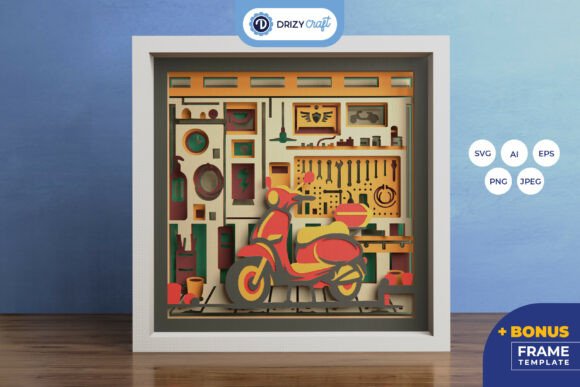
Retro Service Garage 3D Shadow Box Review
As a designer who spends more time staring at stitch maps than most people stare at their phones, I approach every new machine embroidery design with a mix of excitement and skepticism. When I first pulled up the files for the Retro Service Garage 3D Shadow Box, my initial reaction was one of genuine curiosity. The concept of translating a layered paper-cutting aesthetic into thread is ambitious. It promises depth and nostalgia, two things that sell incredibly well in the current market for handmade products. However, moving from a digital 3D SVG concept to a tangible finished product requires a critical eye for how those layers will actually behave under the needle.
The Aesthetic: Nostalgia Meets Dimension
The visual personality of this design is immediately striking. It captures that mid-century automotive vibe perfectly—the kind of imagery that makes you think of old oil cans, checkered floors, and weekend mechanics. For an Etsy seller or boutique owner, this mood is gold. It appeals to a specific demographic looking for personalized gifts with character, rather than generic clip-art styles. The layout suggests a square composition, which is excellent for maximizing hoop space on items like tote bags or pillow covers. The "shadow box" effect relies heavily on the interplay of light and dark areas to create the illusion of depth. In embroidery terms, this means the stitch density and the choice of thread colors will make or break the final look. If the contrast isn't sharp enough, the 3D effect flattens out; if it's too dense, the fabric puckers.
Real-World Application: The Tote Bag Test
To truly evaluate this embroidery file, I imagined a specific real-life scenario: creating a limited run of canvas tote bags for a local car show or a father's day promotion at a small shop. Canvas is a sturdy medium, but it has a distinct fabric texture that can swallow fine details. The Retro Service Garage 3D Shadow Box would need to hold its own against that rough weave.
In this context, the design shines as a statement piece. Unlike a small logo on a chest pocket, a tote bag allows the full square template to breathe. The layered look translates well here because the heavier fabric can support the weight of the stitching without warping. Imagine this stitched in cream, rust, and slate blue threads on a natural canvas bag. It becomes a small shop product that feels high-end and curated. Customers are likely to react positively to the tactile nature of the stitches, especially if the design uses a combination of satin stitch for borders and fill stitch for the larger garage elements. This variety adds visual interest that keeps the eye moving across the embroidery project.
Versatility Across Products
Beyond tote bags, where else does this design fit? It is versatile enough for sweatshirt embroidery, provided the garment isn't too bulky. A retro garage motif on a heather grey crewneck screams "weekend vibes." It could also work beautifully as an embroided patch if digitized with a merrowed edge, allowing customers to iron it onto jackets or hats later. For holiday embroidery or Father's Day gifts, this theme is a no-brainer. It moves away from the cliché "Best Dad" text and offers a graphical element that speaks to hobbies and passions. Even in commercial embroidery settings, such as branding for an actual auto repair shop, this design offers a vintage flair that modern vector logos often lack.
Technical Considerations and Potential Pitfalls
While the aesthetic is strong, practical execution requires caution. The term "Shadow Boxes" implies layers, and in embroidery, layers mean build-up. If you are working on stretchy fabric like a thin t-shirt or a baby onesie, you must be vigilant. The cumulative thickness of multiple color changes and fill areas can cause the fabric to pucker or the design to distort after washing. For baby embroidery, comfort is key; a dense, multi-layered design might feel too stiff against sensitive skin unless backed with a soft cover stitch or placed on a non-contact area like a bib.
Curved surfaces present another challenge. Attempting this on a cap is possible but risky. The square nature of the template fights against the curved front panel of a baseball cap. Unless the design is specifically resized or re-digitized for a cap frame, the corners might not lay flat, ruining the crisp "paper-cut" illusion. Similarly, tiny lettering often found in retro signage can get lost if the hoop size forces the design to be scaled down too small. Always check the minimum recommended size before committing to a production run.
Designer Notes for Success
Before you start stitching on your final inventory, treat this digital embroidery file with the respect it demands. Here is my professional advice for getting the best results:
- Test on Scrap First: Never skip the test stitch-out. Use the exact same fabric and stabilizer combination you plan to use for the final product. This reveals if the tension needs adjustment.
- Check Contrast: Review the design in black and white mockups. If the layers blend together without color, the 3D effect is weak. You may need to adjust your thread colors to ensure distinct separation between the foreground garage elements and the background layers.
- Stabilizer Strategy: For a design with this much detail and potential density, a cut-away stabilizer is often safer than tear-away, especially for items that will undergo frequent washing like aprons or kitchen towels.
- Inspect Small Details: Zoom in on the digitized preview. Look for overly long jumps or tiny satin columns that might not stitch out cleanly on lower-end machines.
- Licensing Check: Since this originates as a layered paper-cutting template, confirm the licensing terms for embroidery use. Ensure you have the right to sell finished products or if there are restrictions on commercial use.
Final Verdict on Value and Appeal
The Retro Service Garage 3D Shadow Box is more than just a cute graphic; it is a potential brand builder. When executed correctly, it elevates the perceived value of the item it adorns. A simple pillow cover becomes a piece of decor art; a plain apron becomes a conversation starter. For creative entrepreneurs, the ability to offer something that looks complex and dimensional—yet is produced efficiently via machine—is a significant competitive advantage.
The design fosters customer trust because it shows attention to detail. It signals that the maker cares about themes and quality, not just slapping a logo on a blank. Whether you are creating custom apparel for a team, unique wedding gifts for car enthusiasts, or expanding your catalog of design assets, this file offers a solid foundation. Just remember that the magic lies in the execution. Respect the fabric, choose your threads wisely, and let the retro charm do the rest. With the right approach, this design can become a staple in your portfolio of printable mockup previews and physical goods alike.